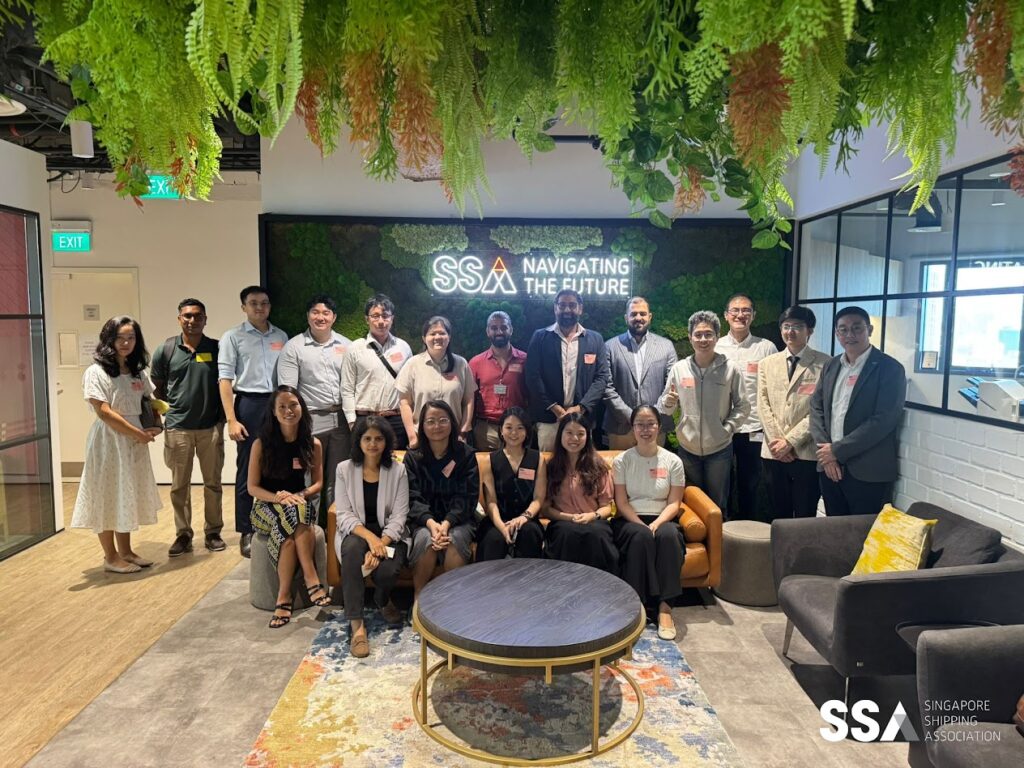
16 Young Executives Group (YEG) members attended the AI in Shipping: From Buzzwords to Real-World Impact session on 10 March 2026 to gain first hand insights into integration of Artificial Intelligence (AI) tools in their daily work.
Addressing AI Knowledge
While interest in AI continues to grow across the industry, many professionals remain uncertain about how they can implement these technologies effectively in their daily work. This knowledge gap is often accompanied by concerns surrounding data security and the responsible use of AI platforms, particularly when handling confidential or company-sensitive information.
This session was therefore held to bridge this gap by introducing practical AI tools, demonstrating real-world maritime applications, and addressing key concerns around safe and responsible usage.
AI Toolset: A Functional Overview
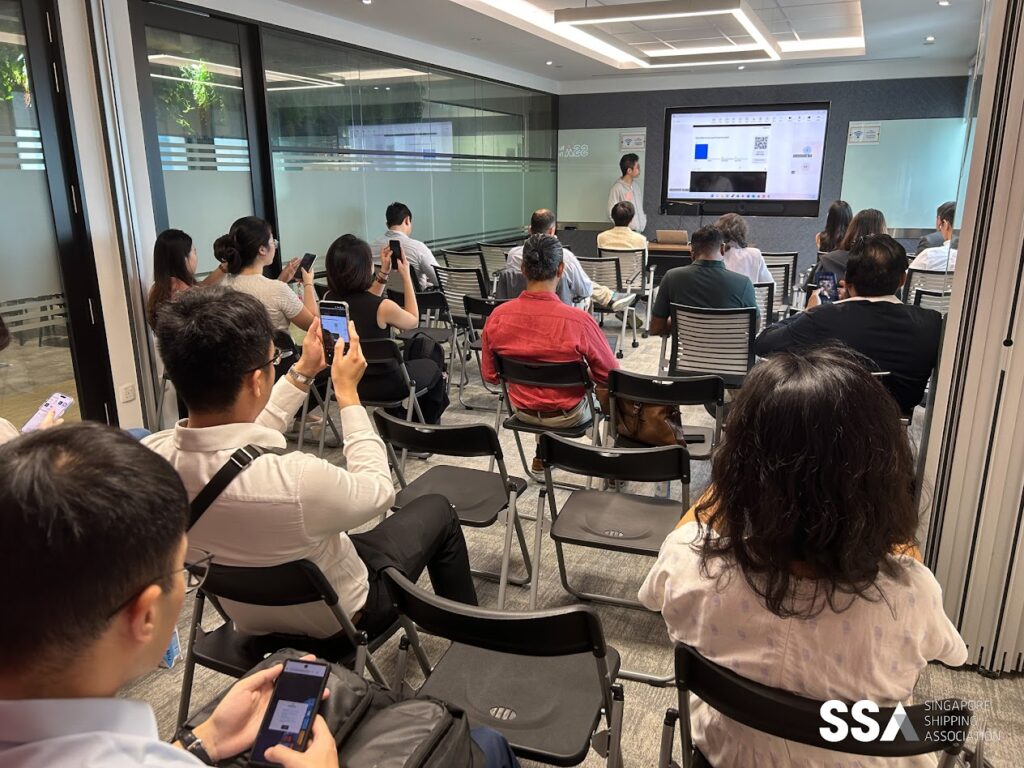
The first half of the session was led by Mr Jon Jie, Co-Founder and Chief Operating Officer from MarinaChain.
A quick survey amongst participants showed that basic AI tools such as ChatGPT, Gemini, and Microsoft Copilot were the most widely used while more complex tools such as DeepSeek, Perplexity, and Claude remain relatively unexplored.
A key highlight of the session was a live demonstration of four levels of AI utility and its applicability in the workplace:
• Level 1 (AI that Chats): General assistance through familiar conversational interfaces such as Gemini and Claude.
• Level 2 (AI that Knows Your Docs): Using Google NotebookLM to ground AI responses in specific professional documents.
• Level 3 & 4 (AI that builds, co-works and acts): Exploring advanced tools such as Google AI Studio and MarinaAI to build specialised and automated workflows.
One concern raised by participants was the risk of uploading confidential documents into AI platforms. Addressing this, Mr Jie emphasised the importance of selecting appropriate service levels. While free versions of AI tools may use data for model training, Enterprise plans provide the necessary security frameworks and data protection required for organisational use.
AI in Practice: Maritime Sector Use Cases
The second segment, led by Mr Dominic Ng, Head of APAC, Veracity by DNV, shifted the focus towards large-scale industry applications. The presentation showcased how AI was already being applied within the maritime sector through use cases such as route optimisation, improved fuel efficiency, and port operations.
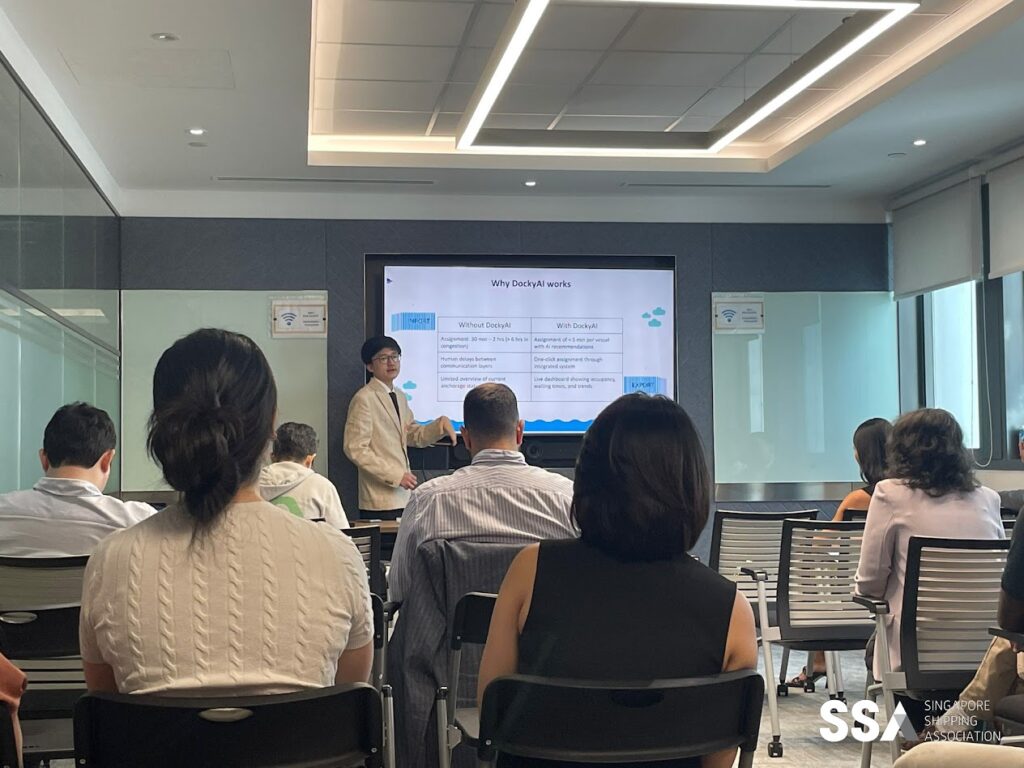
Complementing his sharing, Mr Zhou Chen Yu, a Year 1 student from the Diploma in Applied AI & Analytics programme at Nanyang Polytechnic, introduced DockyAI , a specialised tool designed to optimise vessel entry and exit operations within Singapore’s port ecosystem.
From Insight to Action
The discussions highlighted several critical factors required for successful AI adoption:
• Data Quality: Access to structured, high-quality data remains the foundation of effective AI performance.
• Collaboration: The best results emerge when digital teams work closely with business experts who understand core maritime processes.
• Human-Centric Focus: AI is a tool designed to support the workforce, not replace it. This requires human-led processes to monitor quality and manage risks effectively.
“The focus should be to apply AI to support people in their work—not to replace them.”
– Mr Dominic Ng, Veracity by DNV
By the end of the session, participants gained a clearer understanding of available AI tools, how they can be applied in maritime operations, and how organisations can adopt them responsibly. The event wrapped up with an interactive quiz, with attendees eagerly participating and putting their newly gained insights to the test.
We sincerely thank our speakers for their valuable sharing:
• Mr Jon Jie from MarinaChain
• Mr Dominic Ng from DNV
• Mr Zhou Chen Yu from Nanyang Polytechnic
A special thank you to our quiz prize sponsor, Direct Search, for their generous support.
To view photos of the session, please visit the YEG AI in Shipping photo album.