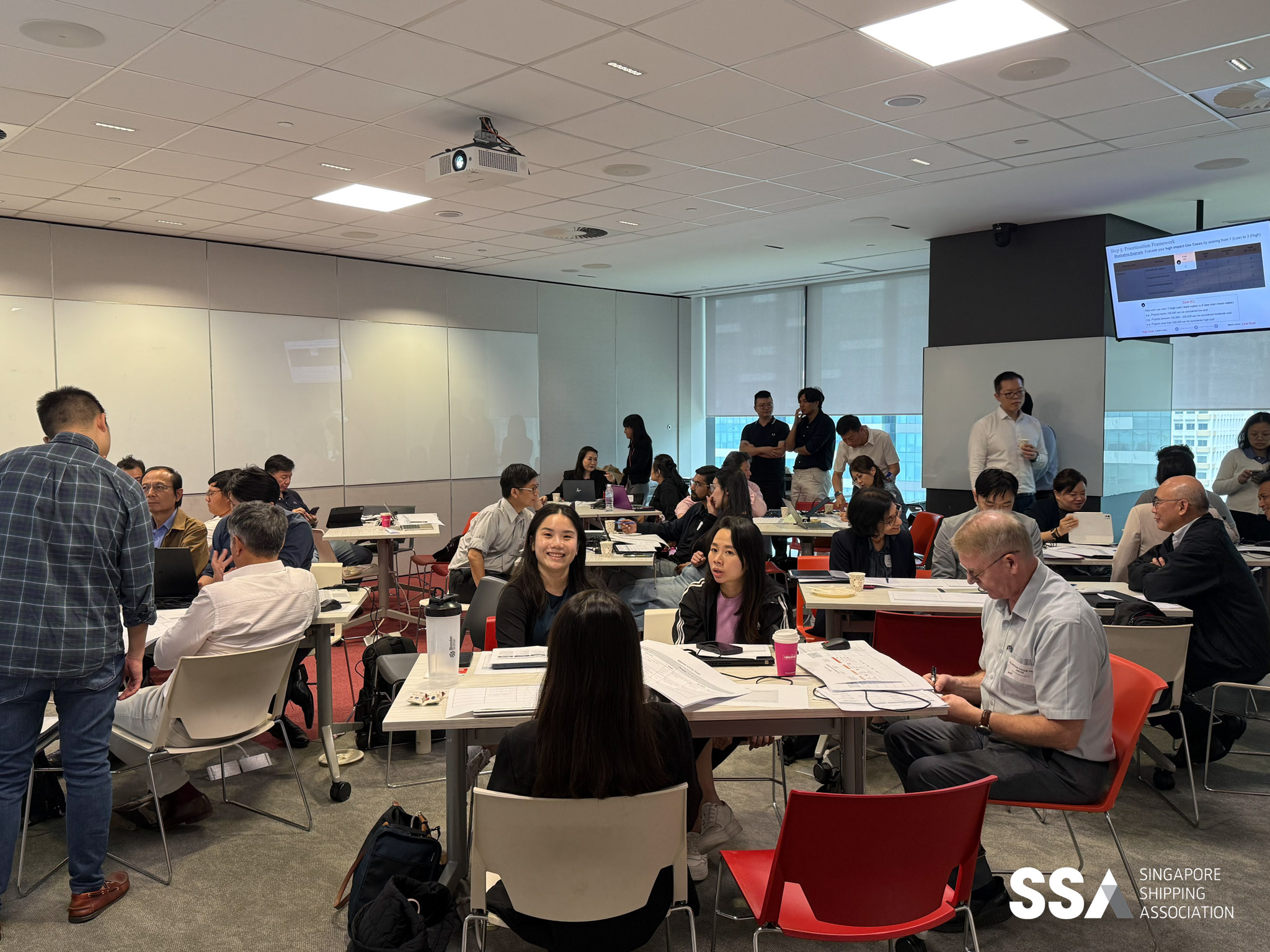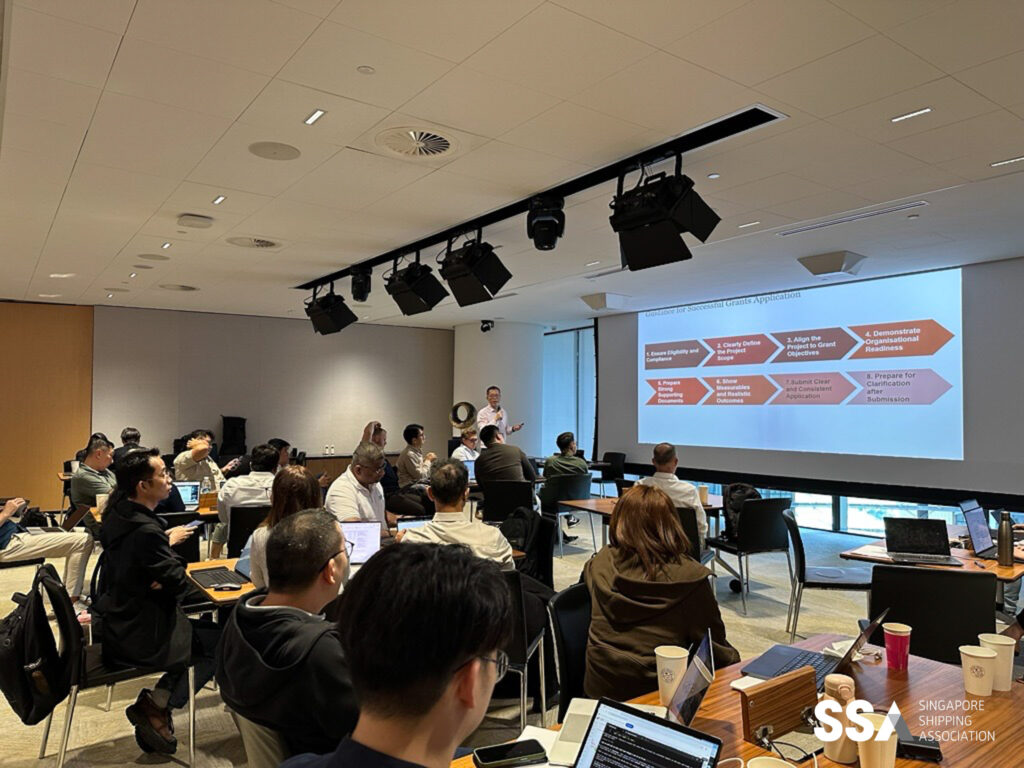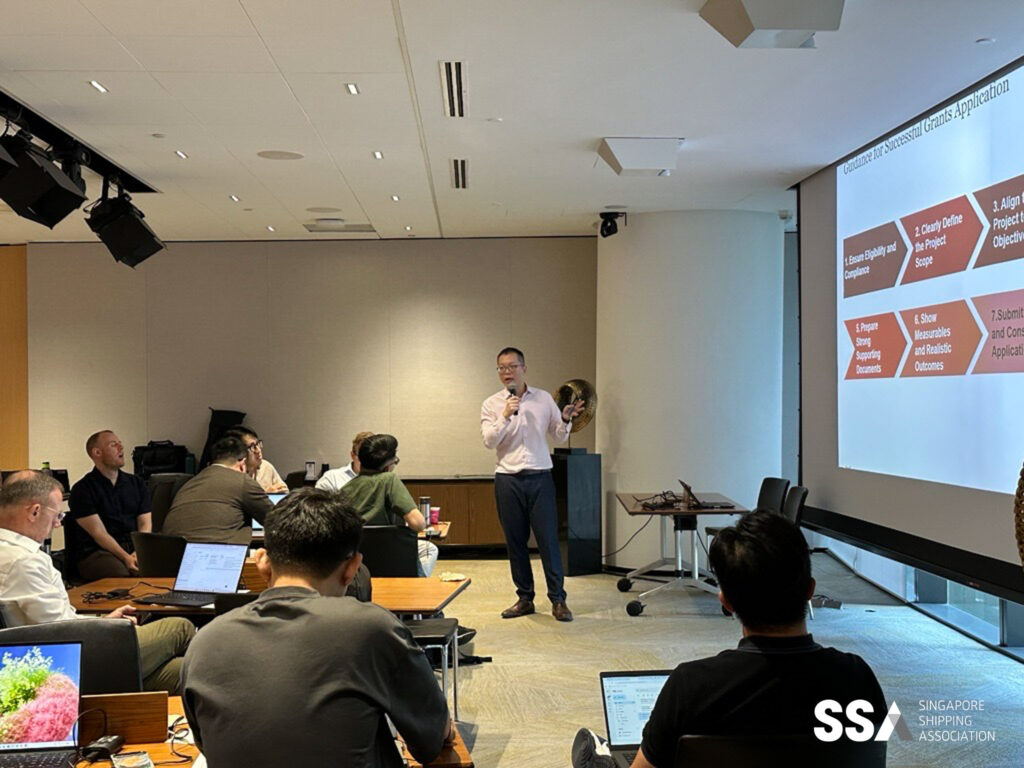
As artificial intelligence (AI) becomes increasingly embedded in business decision-making, the maritime sector is also navigating how best to understand and adopt these technologies responsibly and effectively. Recognising the need to prepare maritime professionals for this shift, the Singapore Shipping Association (SSA) worked with PwC to develop the Anchoring AI Training Series.
1. Can you share a brief overview of your role in and overall vision behind developing the Anchoring AI Training Series?
Our role was to lead the designing and developing of the Anchoring AI Training Series, defining the overall learning framework to ensure it covers key AI concepts in a logical sequence tailored to the maritime industry.

We worked closely with stakeholders and experts from the SSA’s AI working committee to ensure the content is both technically on point and relevant to the industry. We also focused on crafting a learning experience that makes AI approachable and easy to understand for professionals with varied starting points.
The vision was to develop a learning experience that serves as an anchor for maritime professionals navigating the evolving AI landscape. The goal was to build practical, foundational AI literacy tailored specifically to the maritime sector, so that the sector can have a common baseline understanding of AI, enabling the industry to collectively shift the needle in the right direction.
While not everyone needs to be an AI/data scientist, all stakeholders will increasingly face AI-related decisions. This series is structured to equip participants—regardless of technical background—with the knowledge and practical skills to engage with AI more confidently, while offering an interactive, hands-on learning experience that fosters collaboration among peers
2. What prompted you to create this course, and what gap did you see that it needed to fill?
AI has shifted from being a future trend to a present-day reality, with many industries already integrating it into their operations. The maritime sector cannot afford to fall behind in this latest technology wave.
In fact, connectivity, which includes transport and logistics, is one of the four sectors that the Singapore government has identified as a priority for AI adoption. That signals a clear national direction, and with that comes the need to ensure the workforce is upskilled to ride this wave effectively.
We repeatedly heard from the maritime workforce that, while they recognize AI’s importance, they are uncertain where to begin learning or how to apply it in their daily roles. Although there are many AI courses available, very few address the unique context and challenges specific to the maritime industry. That’s the gap we wanted to fill: to establish a tailored AI course for maritime professionals that they can relate to and therefore be able to apply the knowledge that they get from our course.
3. How did you decide on the learning outcomes and competencies that participants should walk away with?
We begin with the people, not the technology. Together with SSA, we identified what are the key areas that maritime professionals need to know and understand about AI. Examples include the need to have a common definition of AI, appreciating how AI has evolved over time and how it can be relevant to the various sub-sectors of maritime sector.
We also curated content from real-life case studies that can be referenced and designed relevant workshop activities that showcases how AI can be applied to participant’s day to day activities, so participants are able to relate.
4. Can you walk us through how you structured the course modules for optimal learning flow?
We have carefully designed the module sequence to optimise the learning flow. The programme begins by establishing a shared foundation, ensuring all participants gain a common understanding of AI, its tools, and key risks. This foundational layer is essential to minimise misconceptions in later modules.
From there, the focus shifts to practical application, featuring maritime-specific use cases, real-world scenarios, and hands-on skills such as prompt engineering and building AI-driven workflows. These interactive activities help learners bridge AI concepts with tangible, everyday tasks in their work.
5. What were the key considerations in balancing technical content with accessibility for non-technical audiences?
Balancing technical content with accessibility was one of the biggest design challenges we faced.
The audience for this course is diverse, including both highly technical professionals and those with limited technical backgrounds. Content that is too technical risks alienating a large portion of learners, while oversimplification may leave participants underprepared for the complexities of real-world AI applications.
To address this, we consistently use inclusive and clear language, minimising jargon whenever possible. When technical terms are necessary, we provide straightforward explanations. For every piece of content, we ask whether someone without a technical background would understand and find it relevant.
6. Which part of the course content was the most challenging to develop, and why?
The most challenging part was keeping pace with how quickly the AI landscape evolves. What’s current today may not be relevant in the next week, so we had to design content that teaches both lasting principles and frameworks as well as the latest tools or trends.
This required a lot of thoughtful curation and timely updates to ensure what we included would remain relevant and valuable to learners well beyond the course itself. What this also meant is that content for each run of the course may be regularly refreshed to include the newest development in AI (e.g., OpenClaw).
We aim for every participant to gain confidence in understanding what AI is—and isn’t—critically evaluating AI solutions and contributing meaningfully to AI discussions within their organisations. AI can be embraced as a powerful tool to enhance operational effectiveness.
At the industry level, our vision is broader. The maritime sector stands at a pivotal moment where AI can drive significant improvements in efficiency, sustainability, and competitiveness across the value chain. This potential will only be realised through well-informed AI decisions, as poorly implemented solutions can undermine value and introduce new risks.