Marine Fuels & e-BDN: Practical, Legal & Insurance Perspectives
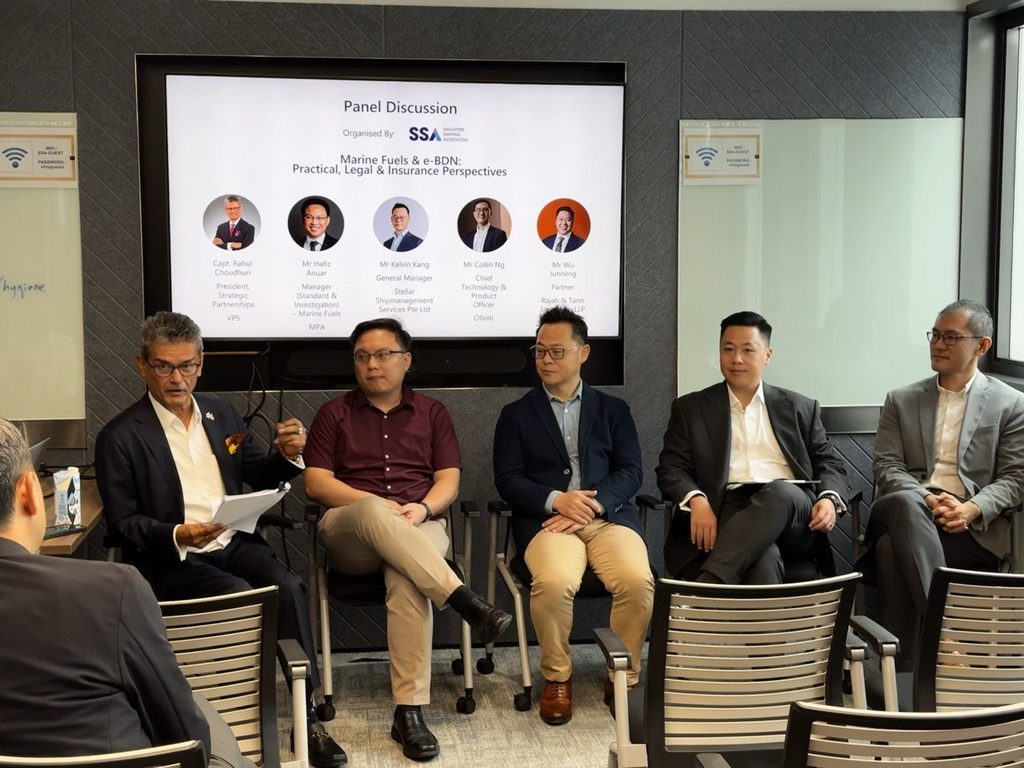
Held on 14 September 2026, the session jointly organised by the Marine Fuels Committee and Legal & Insurance Committee explored two topics: alternative marine fuels, and electronic Bunker Delivery Notes (eBDN).
Shipowners and operators are increasingly seeking knowledge about different types of alternative fuels to help them understand how these choices would impact their business operations, regulatory compliance and longer-term competitiveness. A presentation at the session thus allowed attendees to appreciate how different marine fuels have different operational requirements, including its fuel properties, safety considerations and adoption requirements. They also learnt about each fuel’s infrastructure availability; how the fuel is sourced globally and the availability of bunkering facilities would factor into the suitability of adopting the fuel.
On eBDN, presenters shared on the current state of adoption of eBDNs in Singapore and globally, lessons learnt and what barriers to adoption remain. The legal considerations of eBDN adoption were also explored in detail, including potential insurance issues that may arise from eBDN adoption, and how contractual clauses need to be amended to address the mandatory nature of digital bunkering and digital documentation.
We thank our speakers and panellists for their insights:
- Mr Kelvin Kang, General Manager, Stellar Shipmanagement Services
- Mr Collin Ng, Chief Technology & Product Officer, General Manager, Ofiniti
- Mr Wu Junneng, Partner, Shipping and International Trade Practice Group, Rajah & Tann Singapore LLP
- Mr Hafiz Anuar, Manager, Standards & Investigation (Marine Fuels), Maritime and Port Authority of Singapore
- Moderated by Capt. Rahul Choudhuri, President, Strategic Partnerships, VPS
Sanctions Update for the Shipping Community
Organised by the Services Committee, the session was held on 17 September 2026.
“Sanctions today are far reaching, and it reaches everyone,” Mr Lakhbir Singh, Vice President and Chair of the Services Committee said in his opening remarks, underscoring the importance of sanctions compliance even at a local level.
The panel session covered both the legal and industry perspectives on sanctions, including how organisations can take steps to protect themselves from sanctions risks. On the legal front, the conversation centred around how contractual clauses affect sanctions risk. Organisations are encouraged to collect information and data throughout their KYC processes to reasonably demonstrate that they have done their due diligence.
On the industry side, key takeaways include the practical realities faced by SMEs in Singapore, where organisations must balance due diligence checks with commercial pressures and short lead times. The situation is often nuanced, and information standards between banks and maritime regulators may differ as well.
We thank our panellists and moderators for their time and expertise.